

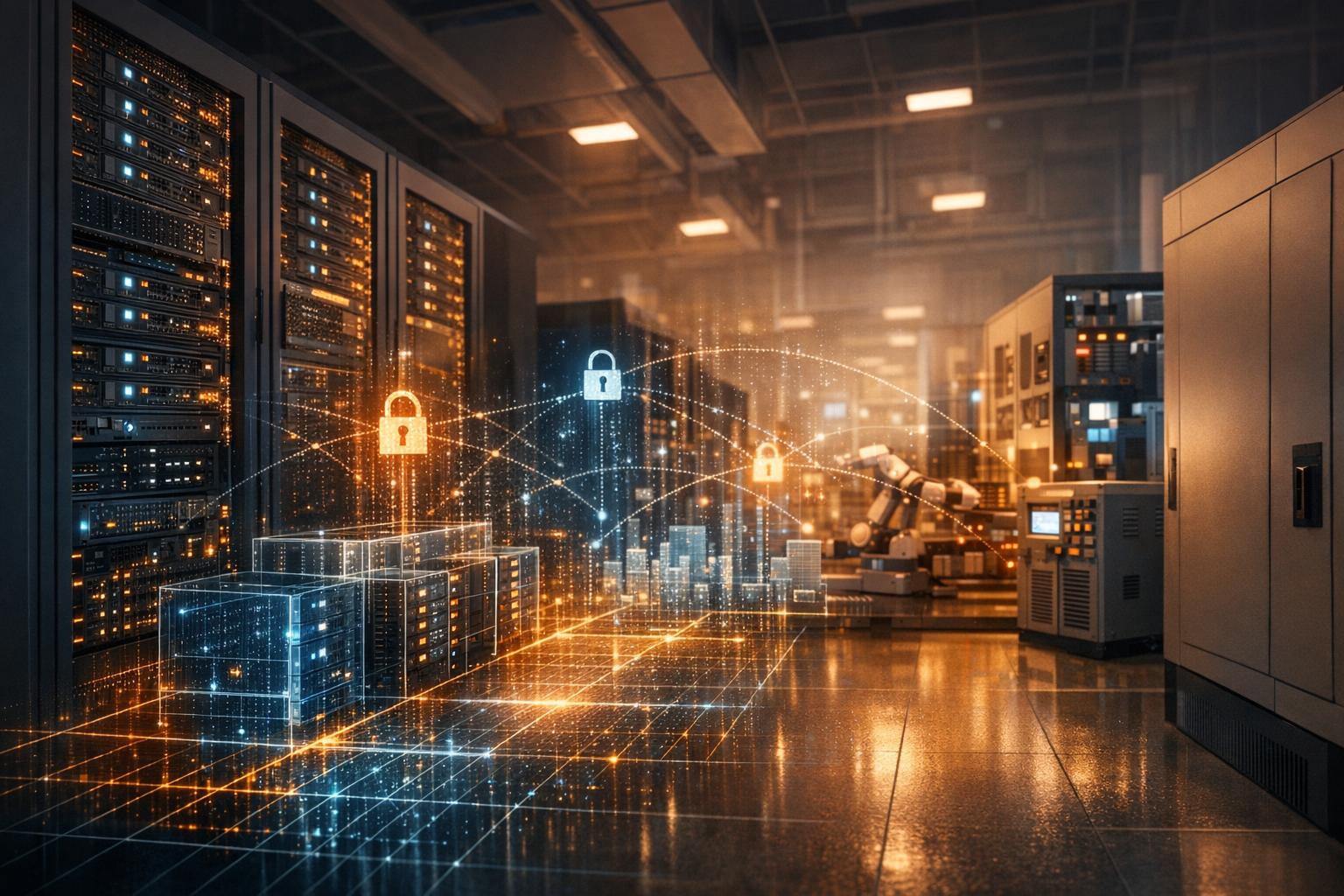
Digital twins are transforming how security incidents are managed by creating real-time digital replicas of IT and operational environments. These replicas allow security teams to detect, analyze, and contain threats faster and more effectively. Unlike traditional methods that rely on fragmented data and manual processes, digital twins provide synchronized, dynamic models that enable proactive testing, predictive insights, and efficient collaboration.
Key takeaways:
- Faster breach response: Digital twins reduce detection times by 33% and containment times by 43%.
- Improved risk visibility: Teams can pinpoint attack origins, evaluate impacts, and simulate fixes safely.
- Enhanced collaboration: Unified models ensure all stakeholders work with up-to-date information.
- Cost-effective testing: Simulations in digital twins avoid disruptions to live systems.
How Google Cloud Uses Digital Twins to Reinvent Cybersecurity Across Industries
Building Digital Twins for Incident Response
Developing a digital twin for managing security incidents involves merging various data streams into one synchronized, constantly updating model. Think of it as a live, digital replica of the physical world. Today, about 75% of businesses are already leveraging digital twins, with 92% of them seeing at least a 10% return on investment (ROI). The key to bringing this concept to life lies in integrating diverse data sources.
Data Sources and Integration
A successful digital twin combines static data - which sets the foundation - and dynamic data - which keeps the twin up-to-date. Static data includes essential details like building layouts, topographical maps, administrative boundaries, and critical infrastructure such as gas, water, and electrical lines. Dynamic data, on the other hand, relies on live inputs from IoT sensors monitoring factors like temperature, humidity, motion, pressure, wind speed, and precipitation. Together, this creates a responsive and accurate digital environment.
To enhance realism, 3D models, LiDAR scans, thermal imagery, orthomosaics, and CCTV footage provide visual and spatial details. Additionally, integrating IT and OT systems, alongside external factors like weather forecasts, traffic updates, and road closures, further enriches the model.
Take, for example, a 2022 prototype involving a simulated accident on the Tyne Bridge between Newcastle and Gateshead. Researchers integrated real-time traffic data from TomTom and weather updates from AccuWeather using Azure Maps. They utilized geoJSON data to simulate responder locations and set up geofencing, which triggered automated text notifications to traffic managers when emergency vehicles arrived.
Once the data is integrated, the next step is building the digital twin specifically for security-focused applications.
Steps to Create Digital Twins
Creating a digital twin starts with capturing the physical environment and ends with deploying a live, functional model. Begin by identifying the assets or processes you want to replicate, whether it’s a data center, a manufacturing floor, or a campus facility. Then, use tools like 3D scanning, LiDAR, or digital cameras to map out the physical space. For instance, Matterport’s AI-based system can generate a digital twin within just 48 hours.
After building the visual framework, the next step is securely linking the physical and digital environments. Tailor the twin for incident response by adding features like geofences, spatial buffers around key areas, and annotations (such as notes or tags) to guide first responders. Finally, test its effectiveness by running simulations - stress tests, failure scenarios, or threat models - to evaluate how your systems would perform under different conditions. These simulations help ensure the digital twin is ready for real-world challenges.
"Digital twins are essentially IT stunt doubles, cloud-based replicas of physical systems that use real-time data to create a safe environment for security and resilience testing".
The demand for digital twins is skyrocketing. In fact, the market is expected to grow from $24.5 billion in 2025 to a staggering $259.3 billion by 2032, driven by the need for tools that improve incident response capabilities.
Real-Time Incident Response with Digital Twins
When a security incident occurs, having a fully implemented digital twin transforms the response process. Instead of relying on fragmented updates, digital twins enable automated and synchronized data sharing. This shift can be the difference between quickly containing an incident and letting it escalate into a full-blown crisis.
Real-Time Data Sharing
The standout feature of digital twins is their ability to manage bidirectional automated data flow. Any changes in the physical environment are instantly mirrored in the virtual model - and vice versa. This seamless synchronization creates a shared operational view, breaking down the siloed workflows often seen in multi-agency responses.
For example, the Tyne Bridge study highlighted how geofencing can automate notifications to traffic managers. This eliminates the need for multi-step phone calls, streamlining communication.
The system architecture relies on secure connectors and real-time messaging to pull data from sensors, cameras, and mobile devices. Specialized engines transfer this data securely from operational technology (OT) systems to the cloud, where it’s analyzed and visualized for incident responders. Strict access controls paired with cross-device compatibility ensure that each team member only sees relevant information, receiving updates precisely when needed.
This live, unified model doesn’t just improve response times - it also lays the groundwork for running effective training simulations.
Simulating and Testing Incident Scenarios
Beyond real-time response, digital twins offer a controlled virtual space to rehearse incident scenarios. Google Cloud security advisors describe digital twins as "IT stunt doubles", enabling simulated adversarial testing without exposing real-world systems to risk.
"There's no red teaming on the factory floor... Adversarial testing in most, if not all, manufacturing production environments is prohibited because the safety and productivity risks outweigh the value."
– Bill Reid, Security Advisor, Office of the CISO, Google Cloud
Research shows that deep learning models like CNN and LSTM-FCN can achieve up to 93% accuracy in detecting anomalies and advanced persistent threats (APTs) when trained on datasets generated by digital twins. This capability allows security teams to simulate a range of scenarios - ransomware attacks, system failures, or coordinated breaches - and test their containment and recovery strategies. These virtual environments provide a risk-free way to uncover vulnerabilities, refine incident response playbooks, and enhance procedures without causing downtime or jeopardizing safety.
Stakeholder Collaboration During Incidents
When responding to incidents, effective collaboration among stakeholders is crucial for timely and coordinated action. The key challenge lies in bringing everyone together under a unified perspective. This is where digital twins shine - they create a shared operational view by integrating multiple data streams into a single, cohesive display. Instead of teams working in silos with fragmented information, digital twins provide all stakeholders with the same up-to-date status on resources and incident progression.
Coordination Across Teams
Digital twins streamline communication and eliminate delays. Traditional methods often rely on numerous phone calls and manual updates, which can slow down response times. With geofencing and automated notifications, these systems ensure that when a first responder enters or leaves a designated area, relevant stakeholders - like traffic managers - are instantly alerted. This allows for quick actions, such as road closures or resource deployment, without unnecessary back-and-forth.
Additionally, built-in annotation and measurement tools enhance teamwork. These features allow stakeholders to directly mark up 3D models with notes and tags, providing everyone with a clear and shared understanding of the situation. This unified perspective ensures that all teams are aligned and working toward the same goal.
Improving Decision-Making with Visual Insights
Visual data changes how stakeholders interpret and act on complex incident information. With digital twins, decision-makers can view 3D models overlaid with real-time data, such as traffic patterns, weather conditions, and sensor readings.
This approach is particularly impactful in industries like manufacturing, which has faced 62.7% of all observed ransomware attacks on industrial control systems in recent years. When incidents occur, security teams can quickly visualize the "blast radius" of affected systems and grasp the interconnections between IT and operational technology (OT). This eliminates the need to sift through dense technical documentation and provides a clear picture of the cascading effects a breach might cause within critical infrastructure. This level of insight is essential for minimizing damage and ensuring a swift, coordinated response.
sbb-itb-ac6e058
Advantages of Digital Twins in Security Incident Management
Conventional vs Digital Twin Incident Management Comparison
Digital twins are changing the game in incident management, offering real-time, two-way data sharing that builds on the collaborative benefits of modern technology. Unlike traditional methods, which depend on manual processes and rigid models, digital twins streamline response times and enable precise testing environments without the hefty costs or inflexibility of older approaches.
One standout benefit is the ability to conduct security testing without disrupting operations. For instance, in February 2023, NIST and the University of Michigan showcased a digital twin of a 3D printer that used real-time temperature monitoring to distinguish between normal fluctuations and cyberattacks. Michael Pease, a Mechanical Engineer at NIST, highlighted the limitations of traditional approaches:
"Manufacturing cybersecurity strategies rely on copies of network traffic that do not always help us see what is occurring inside a piece of machinery... some OT cybersecurity strategies seem analogous to observing the operations from the outside through a window; however, adversaries might have found a way onto the floor."
Comparing Conventional and Digital Twin Approaches
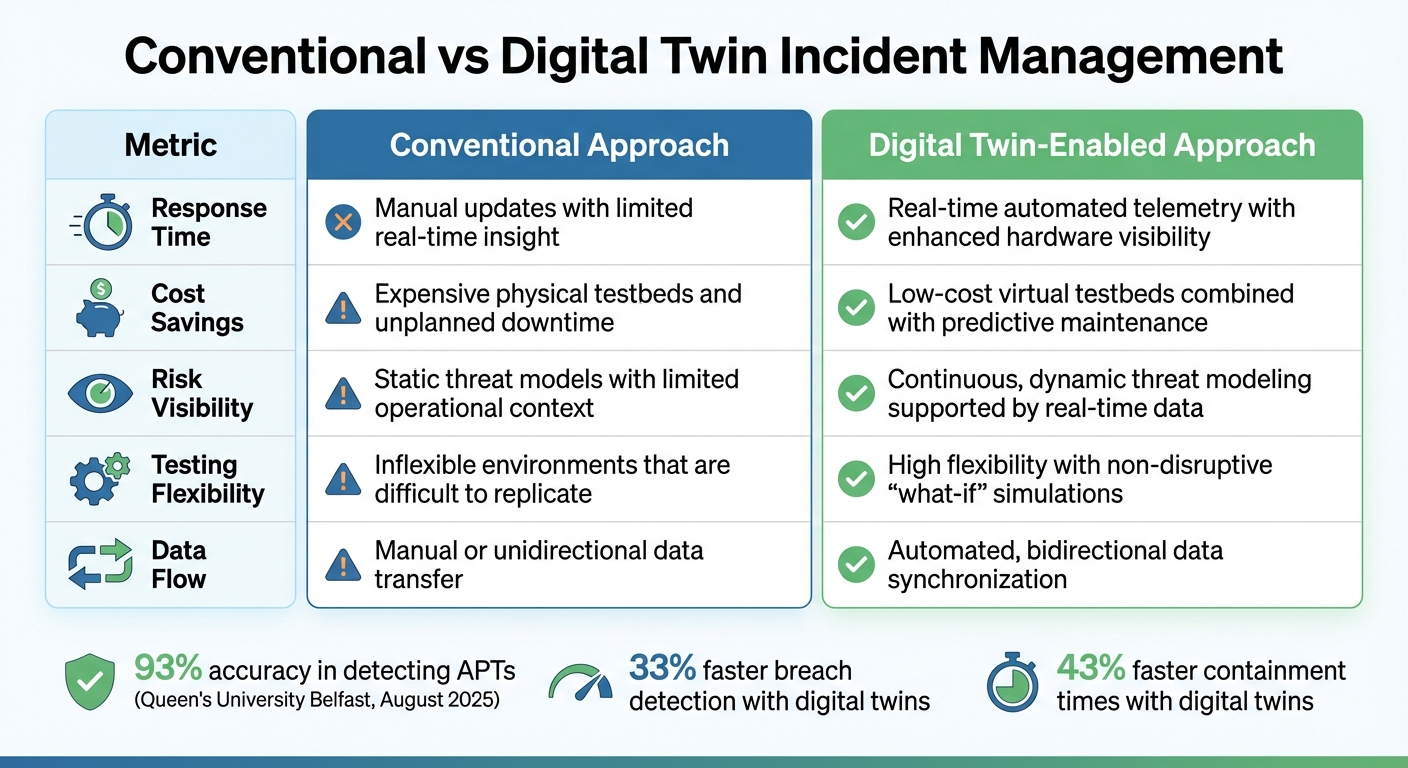
The advantages of digital twins become even clearer when comparing key performance indicators. In August 2025, researchers at Queen's University Belfast demonstrated how digital twin-based testbeds for smart manufacturing improved the training of Convolutional Neural Networks (CNN), achieving an impressive 93% accuracy in detecting Advanced Persistent Threats (APTs). This was made possible by using virtual environments like Factory I/O and OpenPLC, which generated datasets at a fraction of the cost of physical replicas.
| Metric | Conventional Incident Management | Digital Twin-Enabled Approach |
|---|---|---|
| Response Time | Manual updates with limited real-time insight | Real-time automated telemetry with enhanced hardware visibility |
| Cost Savings | Expensive physical testbeds and unplanned downtime | Low-cost virtual testbeds combined with predictive maintenance |
| Risk Visibility | Static threat models with limited operational context | Continuous, dynamic threat modeling supported by real-time data |
| Testing Flexibility | Inflexible environments that are difficult to replicate | High flexibility with non-disruptive "what-if" simulations |
| Data Flow | Manual or unidirectional data transfer | Automated, bidirectional data synchronization |
Digital twins move security from reactive, periodic checks to proactive, continuous monitoring. This shift is especially important for infrastructure with long lifecycles and the increasing overlap of IT and operational technology (OT) systems.
How Anvil Labs Supports Incident Management with Digital Twins

Key Features of the Anvil Labs Platform
Anvil Labs provides a centralized platform that brings together digital twins to aid in every stage of the incident response lifecycle. It consolidates assets and creates precise models of cyber-physical systems - ranging from manufacturing plants to critical infrastructure - all within a single interface.
The platform handles a variety of data types, including 3D models, 360° photos, thermal imagery, LiDAR, and orthomosaics. By combining spatial data with live sensor feeds, it offers a comprehensive view of systems in real-time. With cross-device access, responders can retrieve critical information whenever and wherever they need it.
Granular access controls ensure that sensitive data is shared only with the appropriate stakeholders. Teams can selectively share specific parts of the digital twins - whether with contractors, emergency responders, or executive leaders - while maintaining strict control over what each group can view.
These features enable smooth, real-time collaboration, setting the stage for effective incident management.
Applications in Incident Management
With these capabilities, Anvil Labs equips teams to collaborate efficiently during security incidents. The platform’s real-time collaboration tools allow stakeholders to work together seamlessly. For example, security personnel can use markup tools to highlight compromised areas, document evidence, and communicate findings directly within the digital twin interface. Its integration with task management systems ensures that response actions are assigned and tracked without any friction.
The support for thermal imagery and LiDAR data plays a crucial role in incident response. Security teams can detect anomalies, such as unusual heat signatures from compromised equipment or structural shifts that may indicate physical breaches. This data can then be overlaid onto 3D facility models for enhanced situational awareness. Additionally, integrations with AI analysis tools, Matterport, and YouTube allow teams to incorporate video feeds into their workflows, making the response process even more dynamic and effective.
Conclusion
Digital twins are reshaping how we approach security incident management in cyber-physical systems. Instead of relying on fragmented, reactive tools, they offer a unified, proactive approach that spans the entire lifecycle. By bridging IT and OT environments, digital twins deliver real-time insights into system states and transitions.
With digital twins, organizations can simulate incidents, detect anomalies that manual inspections might miss, and enable seamless collaboration among remote stakeholders. Michael Pease from NIST highlights the gap they fill:
"Typically, I have observed that manufacturing cybersecurity strategies rely on copies of network traffic that do not always help us see what is occurring inside a piece of machinery or process".
Digital twins provide that much-needed "look under the hood."
The impact of digital twins is already evident in real-world applications. For instance, by May 2024, BMO had implemented digital twin technology across more than 500 locations nationwide. In the Netherlands, the Dutch Demonstrator Project used digital twins to safeguard electricity grids from cyber threats. Meanwhile, Brussels Airport collaborated with IES in 2024 to create digital twins for 40 sites, aligning with their goal to achieve net-zero emissions by 2030.
Anvil Labs has taken these capabilities a step further by consolidating them into a single, practical platform for incident management. By integrating 3D models, thermal imagery, LiDAR data, and live sensor feeds into one interface with granular access controls, the platform equips security teams to respond swiftly and decisively. With built-in AI analysis tools and task management systems, it ensures every response action is tracked and executed efficiently.
FAQs
How can digital twins enhance response times during security incidents?
Digital twins enhance response times by offering a real-time virtual model of physical assets. By integrating live sensor data, they can instantly identify anomalies, allowing teams to make quicker decisions and take coordinated actions. These virtual models also simulate potential scenarios, helping teams anticipate challenges and address them more effectively.
Another advantage is how digital twins streamline collaboration. They provide stakeholders with the most current information, ensuring everyone stays on the same page and can respond swiftly to security threats. This leads to faster detection, assessment, and resolution of incidents, minimizing delays and improving overall efficiency.
What types of data are used to create a digital twin for security incident management?
A security-focused digital twin pulls together information from IoT sensors, LiDAR scans, thermal imaging, and other live sensor feeds. This combination creates a highly detailed, real-time virtual model of the environment, allowing for quicker decisions and more effective responses to incidents.
By integrating these varied data sources, digital twins boost situational awareness and make it easier for teams to coordinate during security events.
How do digital twins improve collaboration during security incidents?
Digital twins offer a dynamic, real-time virtual model of an industrial site by combining data from various sources like sensors, video feeds, and LiDAR scans. This creates a centralized source of truth that everyone - operators, engineers, or even emergency responders - can rely on. With everyone accessing the same up-to-date information, confusion is minimized, and decisions can be made faster.
These systems ensure instant updates across devices, so whether it's a technician in the field, an analyst in the command center, or a manager working remotely, everyone sees the same incident data. This includes critical details like timelines, asset conditions, and environmental factors. Plus, users can add annotations or alerts directly to the 3D model, making collaboration smoother and more efficient.
Digital twins also provide contextually linked data, such as marking sensor locations or layering in external factors like weather conditions. This comprehensive perspective helps close communication gaps, align responses, and drive quicker, more effective solutions.

.svg)


