

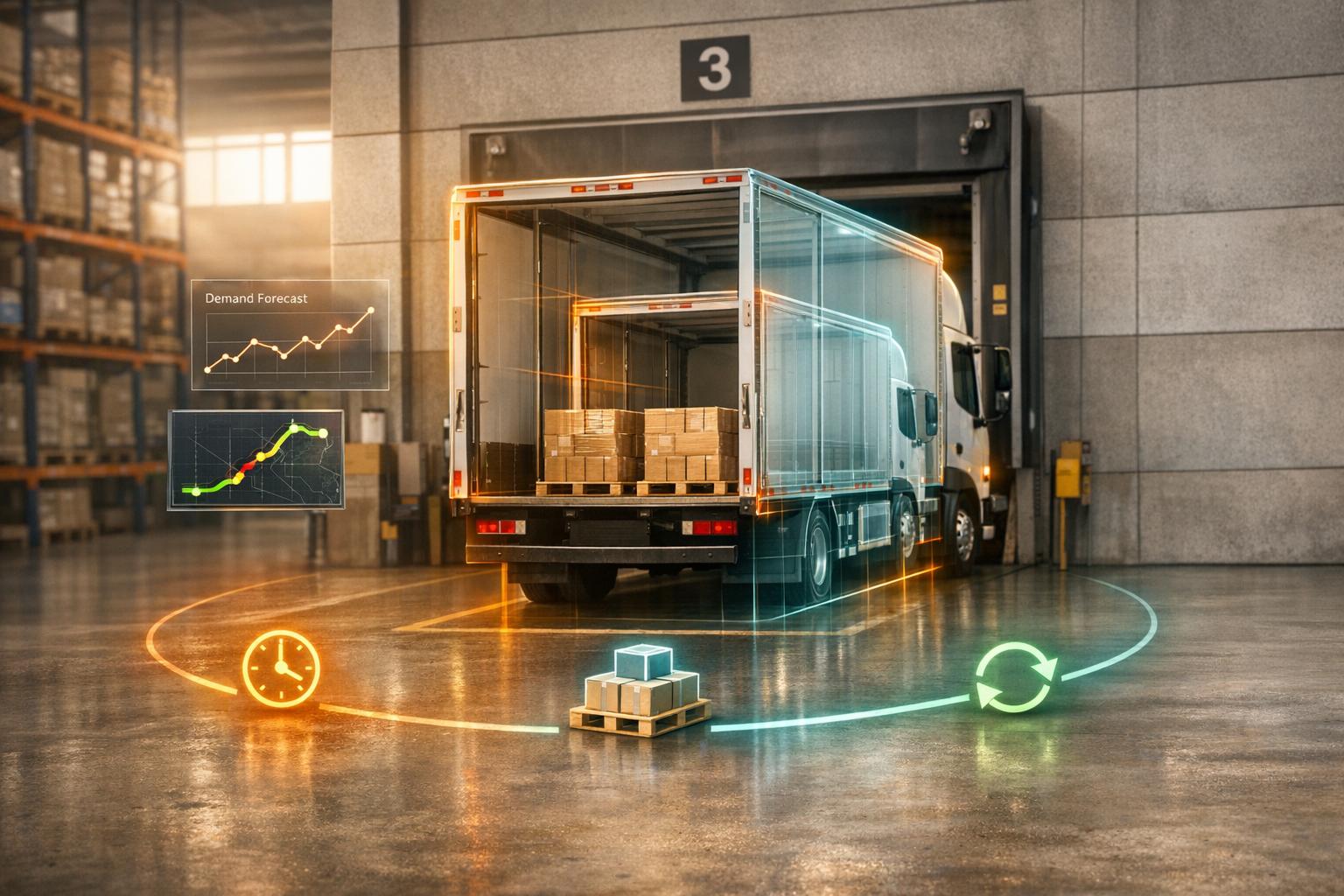
Digital twins are reshaping logistics by offering virtual models of supply chains that simulate real-world operations. These models use IoT sensors, GPS, and AI to predict disruptions, optimize routes, and streamline processes. Companies using digital twins have reported:
- 45% fewer disruptions and 80% faster recovery times.
- 15%-25% lower inventory costs and 10%-15% improved service levels.
- Market growth from $3.4 billion in 2024 to $6.4 billion by 2030.
Unlike older methods that rely on outdated data and manual processes, digital twins provide real-time insights and predictive analytics. However, they require significant initial investment and come with cybersecurity challenges. For businesses ready to invest, these tools offer faster decision-making and reduced risks, making them a key asset in modern logistics.
1. Traditional Risk Management Methods
Predictive Capabilities
Traditional risk management in logistics leans heavily on historical data and manual forecasting. These methods depend on identifying past trends, which often fall short when it comes to predicting disruptions. Logistics networks are dynamic by nature - factors like seasonal demand surges, unexpected equipment failures, and market volatility frequently break established patterns. Without the advanced insights provided by AI-driven analytics, logistics teams find it difficult to foresee equipment malfunctions or abrupt shifts in shipping volumes. This leaves businesses exposed to risks that could have been better managed with more precise forecasting.
Real-Time Data Integration
In many traditional logistics setups, software systems operate in isolation, with little to no communication between them. This siloed approach fragments operational data, making it hard to get a complete picture of the supply chain. For example, shipment delays often require lengthy investigations to uncover the root cause. As Traxtech explains, "Planning, logistics and operations typically run on separate systems with manual coordination". This lack of integration means disruptions are frequently identified only after they’ve already caused delays. As a result, responding proactively - whether through rerouting shipments or adjusting schedules - becomes nearly impossible.
Cost Efficiency
The reactive nature of traditional systems tends to inflate costs throughout the supply chain. Without real-time visibility into factors like fuel usage, routing, or inventory, logistics managers miss opportunities to make on-the-spot adjustments. This often leads to imbalanced stock levels and inefficient truck routes, as systems fail to factor in live traffic or weather conditions. Experimenting with new strategies is also risky, as it can disrupt daily operations and add to overall expenses. These inefficiencies create a cycle of delays and higher costs, which ultimately eat into profit margins.
Resilience and Response Time
Traditional systems prioritize stability over flexibility, which limits their ability to adapt quickly to unexpected challenges. They lack tools like "what-if" simulations that could help managers prepare for scenarios such as port closures, labor strikes, or extreme weather. As Traxtech highlights, "Traditional manual processes can't deliver solutions fast enough". This reactive approach often results in slower recovery times and more severe operational disruptions when unforeseen events occur. These shortcomings highlight the need for more advanced solutions, such as digital twin-enabled risk management, to address modern logistics challenges effectively.
sbb-itb-ac6e058
2. Digital Twin-Enabled Risk Management
Predictive Capabilities
Digital twins are reshaping logistics forecasting by combining machine learning with time-series analysis to deliver precise predictions about shipment volumes, transit times, and equipment maintenance needs. Unlike traditional methods that simply identify trends, digital twins take it further with prescriptive analytics, offering actionable recommendations like rerouting shipments or reallocating resources before disruptions occur. For example, AI algorithms can analyze equipment data to spot potential failures, enabling maintenance to happen before downtime disrupts the supply chain. When there’s incomplete data, synthetic data generation steps in, training AI models to handle extreme scenarios. The growing adoption of this technology is reflected in the logistics digital twin market, which is expected to reach $125–150 billion by 2032. By integrating predictive insights with live data, digital twins help tackle operational challenges before they escalate.
Real-Time Data Integration
Digital twins create a live, virtual representation of logistics networks by pulling data from IoT sensors, GPS, and telematics across warehouses, vehicles, and inventory systems. This continuous data flow allows teams to identify issues like slowdowns early and reroute shipments to maintain service levels. Amy Roach from Inbound Logistics captures this perfectly:
"Digital twins in logistics turn live data into smart decisions".
By connecting with ERP and WMS platforms, digital twins provide system-wide visibility. Real-time alerts notify managers of critical deviations - such as temperature changes in refrigerated trucks or delayed pickups - helping prevent small problems from snowballing into major disruptions. This dynamic approach replaces static dashboards with live workflows, enabling proactive planning and cutting down on wasted resources like empty truck miles.
Cost Efficiency
The predictive power of digital twins translates directly into cost savings and better resource management. Companies using these technologies have reported inventory cost reductions of 15% to 25%, along with service level improvements of 10% to 15%. Forecast accuracy also jumps by 20% to 30% when digital twins are in play.
A great example comes from July 2024, when a steel manufacturer used a Value Chain Digital Twin to simulate a network of 50 production assets, over 300 warehouses, and 20,000+ SKUs. This allowed the company to anticipate risks up to 12 weeks ahead, boosting EBITDA by 2 percentage points and cutting inventory levels by 15%. Similarly, a renewable energy company used a digital twin to adjust supply chain buffers dynamically, reducing project delays and minimizing cost overruns during construction.
Resilience and Response Time
Digital twins add a virtual layer of resilience, allowing companies to stress-test their supply chain processes and uncover weak points before they lead to real-world problems. Businesses with advanced risk management systems report 45% fewer disruptions and recover 80% faster when issues arise. Early adopters of digital twins have seen delays and downtime drop by 50% to 80%.
This technology shifts crisis management from reactive to proactive. As Trax Tech explains:
"Digital twin technology... shifts the paradigm from reactive problem-solving to predictive risk management".
Metrics like Time-to-survive (TTS) - the duration operations can continue without resupply - and Time-to-recover (TTR) help quantify the impact of disruptions, turning vague risks into actionable timelines. With these tools, companies can simulate responses to challenges like port closures, labor strikes, or extreme weather events, ensuring they’re prepared before the crisis hits. As Go To Truckers puts it:
"Scenario planning shows the cost and service impact of disruptions - before they happen".
Webinar: Supply Chain Digital Twins: Modeling Disruptions & Building Resilience
Advantages and Disadvantages

Traditional vs Digital Twin Risk Management in Logistics Comparison
Let’s break down how traditional risk management stacks up against digital twin-enabled methods when it comes to handling disruptions, costs, and scalability. Traditional approaches lean heavily on spreadsheets, historical data, and instinct - reliable tools in simpler times but less suited for today’s intricate, interconnected supply chains. On the other hand, digital twins create virtual replicas of logistics networks using AI and real-time IoT data, allowing businesses to simulate thousands of scenarios without interrupting daily operations.
The cost factor highlights a key distinction. Traditional methods have lower upfront costs, but they often lead to high consulting fees and hidden inventory expenses over time. In contrast, digital twins demand a larger initial investment for IoT sensors, cloud platforms, and data integration. However, this investment pays off by cutting inventory costs by 20% and improving order-to-delivery prediction accuracy by 57%. The market reflects this confidence: valued at $3.4 billion in 2024, the supply chain digital twin market is expected to grow to $6.4 billion by 2030.
One of the most striking differences lies in how each approach handles disruptions. Traditional methods can take days or even weeks to assess the impact of events like port closures or labor strikes, relying on manual processes. Digital twins, however, can pinpoint alternative solutions within hours. Still, this speed comes with risks. Greg Porter, Principal Solutions Architect at Sev1Tech, cautions:
"When you're getting that full-loop digital twin, where you're feeding the virtual data and then from the virtual back to the real world, you're opening a bigger attack vector because now you're actually giving a direct path into physical things that could easily be taken over".
Cybersecurity vulnerabilities, system complexity, and data integration issues contribute to 50% of digital twin project failures, exposing companies to increased risks of cyber-physical attacks.
Here’s a quick comparison of the two approaches:
| Factor | Traditional Risk Management | Digital Twin-Enabled Approach |
|---|---|---|
| Primary Tools | Spreadsheets, historical data, gut instinct | Virtual replicas, AI, real-time IoT data |
| Cost | Lower initial setup; high consulting fees and inventory costs | High upfront tech investment; 20% lower inventory costs |
| Efficiency | Days to respond to disruptions; manual updates | Hours to respond; automated real-time updates |
| Scalability | Limited by manual labor and siloed models | High; cloud-native allows massive simulations |
| Adaptability | Static; relies on past performance | Dynamic; tests thousands of future scenarios |
| Security Risk | Lower digital footprint; standard IT risks | Higher; creates new cyber-physical attack vectors |
While digital twins offer clear benefits in efficiency and adaptability, they’re not without their challenges. Success hinges on accurate data and skilled professionals, both of which can be hard to come by. Yet, for those who overcome these obstacles, the rewards are significant: reduced delays, minimized downtime, and the ability to anticipate risks weeks in advance.
Conclusion
Digital twins are transforming how logistics companies approach risk management. Instead of scrambling to respond to disruptions, businesses can now predict potential issues, test various scenarios, and prepare contingency plans well in advance. The results speak for themselves: a 20% reduction in inventory carrying costs and a 57% improvement in order-to-delivery forecast accuracy highlight the real-world impact of this technology.
The market reflects this growing confidence. Valued at $3.4 billion in 2024, the logistics digital twin market is projected to reach $6.4 billion by 2030. This growth underscores the technology’s ability to provide real-time visibility across supply chain networks, enabling faster responses to delays and smarter rerouting decisions. As Amy Roach puts it:
"Digital twins in logistics turn live data into smart decisions. These models improve planning, boost speed, and raise accuracy across modern supply chain management strategies".
For companies ready to implement digital twins, a step-by-step approach is key. Start with areas that promise the highest impact, such as transportation or inventory management. Integrate the technology with existing TMS (Transportation Management Systems) and WMS (Warehouse Management Systems) for seamless operations. It’s also crucial to define measurable KPIs - tracking improvements in speed, cost efficiency, and reliability - and to have skilled analysts who can turn complex data into actionable strategies.
The question isn’t if companies should adopt digital twins, but when. Those who wait risk being outpaced by competitors who can predict disruptions, optimize routes in real time, and maintain resilience when challenges arise. Even avoiding a single major error could justify the investment.
FAQs
What data do I need to build a logistics digital twin?
To build a logistics digital twin, you’ll need a variety of data points, including details about shipments, vehicles, routes, inventory levels, and external factors such as weather and traffic conditions. Gathering this data typically relies on technologies like sensors, GPS, and IoT devices. Tools such as LiDAR and thermal mapping are also essential for creating precise 3D models.
Once the data is collected, cloud platforms come into play, handling both processing and storage. From there, AI and analytics take over, converting raw data into actionable insights. These insights enable real-time monitoring, simulations, and predictive planning, all of which are critical for optimizing logistics operations.
How long does it take to see ROI from a digital twin?
Digital twins can deliver a return on investment (ROI) in as little as a few months or take up to a couple of years, depending on how they are applied. In particular, drone-based digital twins tend to offer quicker paybacks. They can cut inspection costs by as much as 75% and significantly speed up project timelines, with these advantages often becoming clear within just a few months.
How do I secure a digital twin against cyber-physical attacks?
To safeguard a digital twin from cyber-physical threats, focus on a multi-layered defense strategy. Start by encrypting communications to protect data in transit and ensure sensitive information remains secure. Secure data storage is equally crucial - use robust encryption and access restrictions to prevent breaches. Regular security audits help identify vulnerabilities and keep defenses up to date.
Strengthen access controls by implementing multi-factor authentication and strict user permissions to block unauthorized access. Protecting data integrity is also essential - deploy measures to guard against malware and tampering.
Additionally, integrate real-time validation and AI-driven error detection to catch anomalies as they occur. Leveraging edge computing for localized threat detection can further reduce risks, ensuring your systems remain resilient and operational under potential threats.

.svg)


